
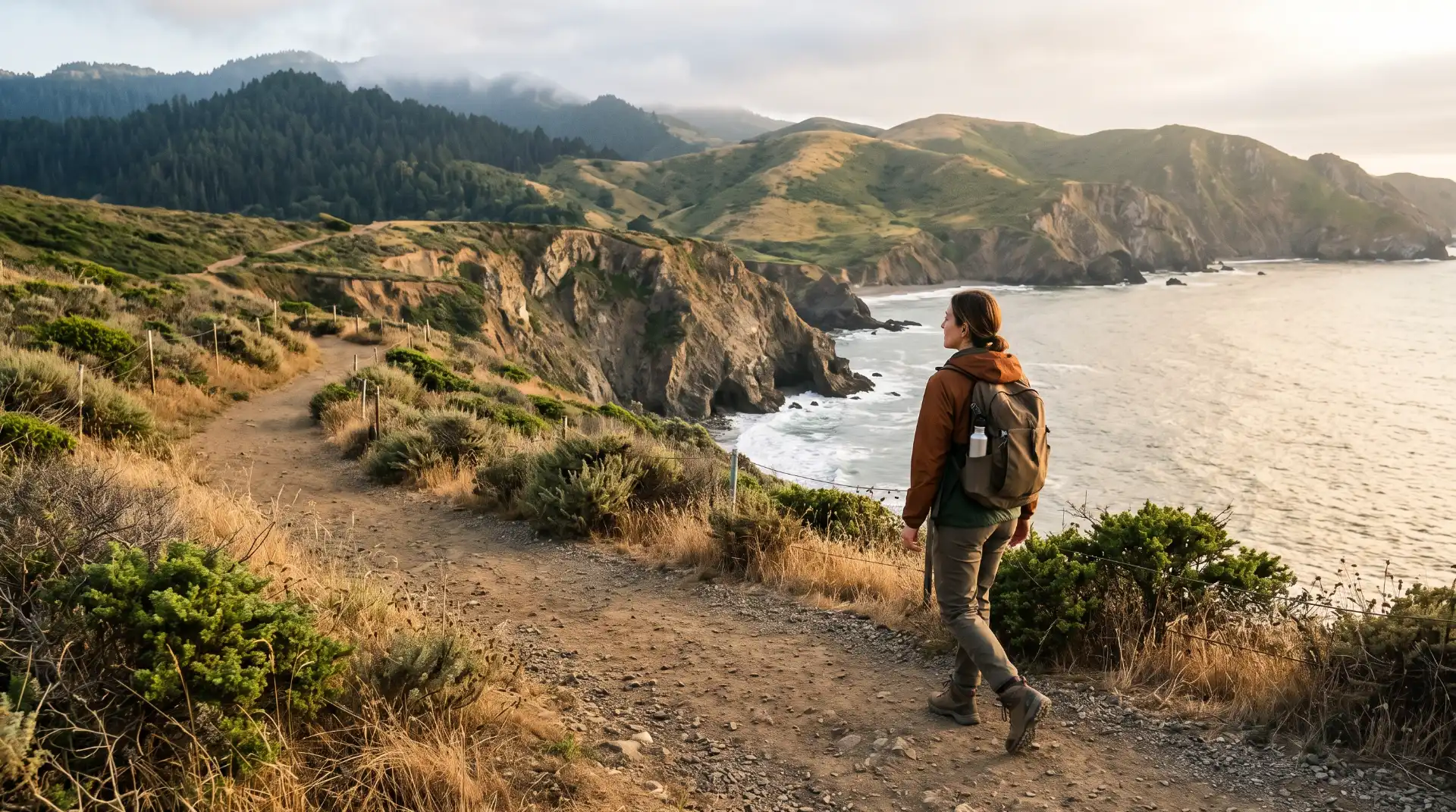
Marin County, California, is one of Northern California’s most memorable destinations for travelers who love the outdoors. From the towering redwoods of Muir Woods National Monument to the rugged shoreline of Point Reyes National Seashore, the region offers a remarkable combination of beaches, forests, wildlife habitats, scenic roads, and welcoming communities. Visitors can spend a morning hiking beneath ancient trees, an afternoon watching waves roll onto the Pacific coast, and an evening enjoying a meal at a locally owned restaurant.
However, Marin County’s natural beauty is also a responsibility. The same landscapes that attract visitors contain sensitive ecosystems, wildlife habitats, fragile coastal environments, and natural resources that can be affected by heavy recreational use. Litter, trail erosion, wildlife disturbance, traffic congestion, and careless behavior around beaches and wetlands can gradually damage the places people travel to experience.
Sustainable tourism offers a better way to explore the region. It encourages visitors to enjoy outdoor attractions while reducing environmental impacts, supporting local businesses, respecting communities, and protecting natural spaces for future generations. Responsible travel does not mean giving up beautiful destinations or avoiding popular attractions. Instead, it means making thoughtful decisions before, during, and after a trip.
Whether you are planning a weekend getaway from San Francisco, a family vacation along the coast, a hiking trip through the redwoods, or a wildlife-watching excursion in West Marin, this guide explains how to experience Marin County more responsibly. With practical planning, respectful outdoor habits, and support for local communities, visitors can enjoy an unforgettable California adventure while helping preserve the landscapes that make the county special.
What Sustainable Tourism Means in Marin County
Sustainable tourism is travel that considers environmental protection, local economic well-being, and the quality of life of the communities being visited. It recognizes that tourism can bring valuable income to local businesses while also creating pressure on roads, public facilities, beaches, trails, and natural habitats.
In Marin County, sustainable tourism is particularly important because outdoor recreation is closely connected to the region’s identity. Redwood forests, coastal headlands, open-space preserves, wetlands, and agricultural landscapes are major attractions, but they are also living environments that require protection.
A responsible visitor considers more than the photographs or activities included in an itinerary. They think about how they will reach a destination, where they will park, whether their visit coincides with a sensitive wildlife season, how much waste they will generate, and whether their spending benefits the communities they visit.
For example, someone planning a visit to Muir Woods can reserve parking in advance, arrive prepared, remain on established trails, and carry reusable water bottles. A family visiting a coastal beach can check local conditions, avoid disturbing tide pools, and take every piece of trash home. Travelers exploring Point Reyes can choose designated viewpoints, observe wildlife from a safe distance, and support nearby businesses.
These decisions may seem small, but they become meaningful when repeated by thousands of visitors throughout the year.
Marin County also benefits when tourism is distributed thoughtfully. Visiting a popular attraction during a less crowded period, exploring another suitable public recreation area, or spending additional time in a nearby community can create a more enjoyable experience while reducing pressure on heavily visited locations.
The objective is not simply to attract more visitors. It is to help people experience Marin County in ways that respect its natural environment and strengthen the communities that make the destination unique.
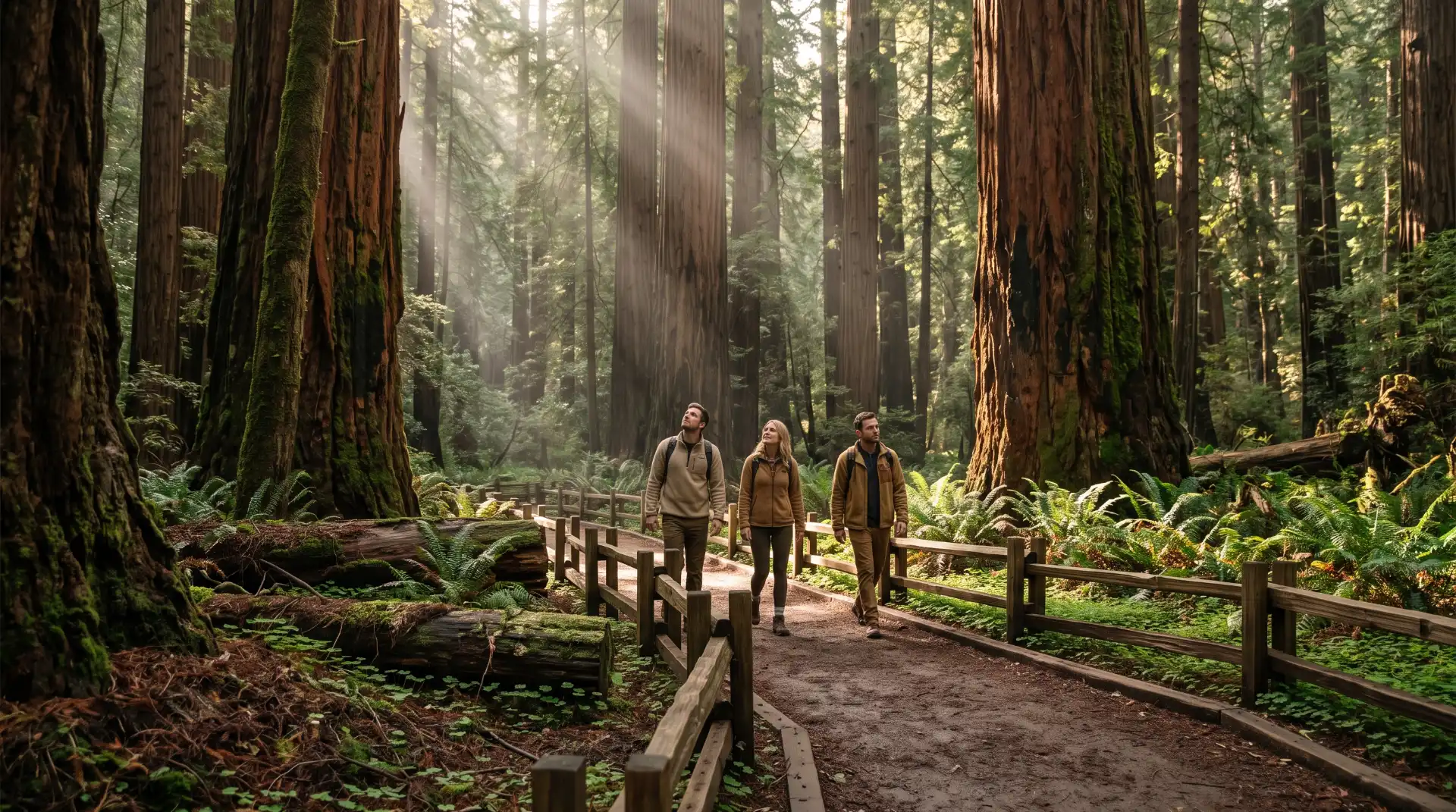
Explore Marin County’s Redwoods Without Damaging the Forest
Why Redwood Forests Need Responsible Visitors
The redwood forests of Marin County are among the region’s most recognizable natural treasures. Muir Woods National Monument, located near Mill Valley, protects an impressive grove of coast redwoods that attracts visitors from throughout the United States and around the world.
Walking beneath these towering trees can feel like entering another world. The forest canopy filters sunlight, the air often feels cool and damp, and the sounds of nearby roads give way to birdsong and the quiet movement of people along the trails.
Yet the forest environment is more delicate than it may appear. Redwood roots, young plants, fungi, soil organisms, and fallen vegetation all contribute to a functioning ecosystem. Repeated foot traffic outside established paths can compact soil, damage vegetation, and increase erosion. Small shortcuts created by visitors may gradually become larger areas of disturbance.
Responsible hiking begins with staying on designated trails. Even when an unmarked path appears to offer a better photograph or a shorter route, leaving the established trail can damage vegetation and contribute to erosion. Visitors should follow posted signs and respect any barriers intended to protect sensitive areas.
It is equally important to leave natural materials where they belong. Fallen branches, moss, wildflowers, rocks, and other forest features contribute to the natural environment. Collecting souvenirs may seem harmless, but allowing natural objects to remain in place preserves the forest experience for wildlife and future visitors.
Plan Ahead for Muir Woods
Planning ahead is one of the simplest ways to make a redwood forest visit more sustainable. Muir Woods has limited parking, and visitors arriving without the required reservation may find that they cannot park as expected. Travelers should consult the official National Park Service website before leaving home and secure any required parking or shuttle reservation.
Official visitor information is available at the Muir Woods National Monument website.
Advance planning also reduces unnecessary driving around the area in search of parking. Visitors should download reservation information and maps before arrival because cellular service may be unreliable. Bringing water, suitable footwear, weather-appropriate clothing, and a clear understanding of the selected route can prevent avoidable problems.
Whenever possible, consider public transportation or the official shuttle options available for your travel date. These alternatives may reduce individual vehicle use, although schedules, service availability, and access arrangements should always be checked in advance.
Once inside the monument, move quietly, avoid playing loud music, and give other visitors room to enjoy the forest. Muir Woods is not simply a backdrop for photographs; it is a protected natural place where the atmosphere of quiet observation is part of the experience.
Keep Food and Waste Out of Sensitive Areas
Food scraps are often mistaken for harmless natural waste. However, throwing an apple core, banana peel, or other leftover food into the forest can attract wildlife and introduce food that animals should not depend on.
Visitors should use designated eating areas where permitted and follow posted waste-disposal instructions. If a trail does not have trash receptacles, carry waste out rather than leaving it behind.
Reusable bottles and containers can help reduce disposable packaging. A small bag for wrappers and other personal waste is useful during longer walks, especially when traveling with children.
The National Park Service provides detailed guidance on Leave No Trace and zero-waste practices at Muir Woods. Following those recommendations helps protect both the redwoods and the wildlife that depend on the forest.
Protect Marin County’s Beaches and Coastal Habitats
Enjoy the Coast Without Leaving a Trace
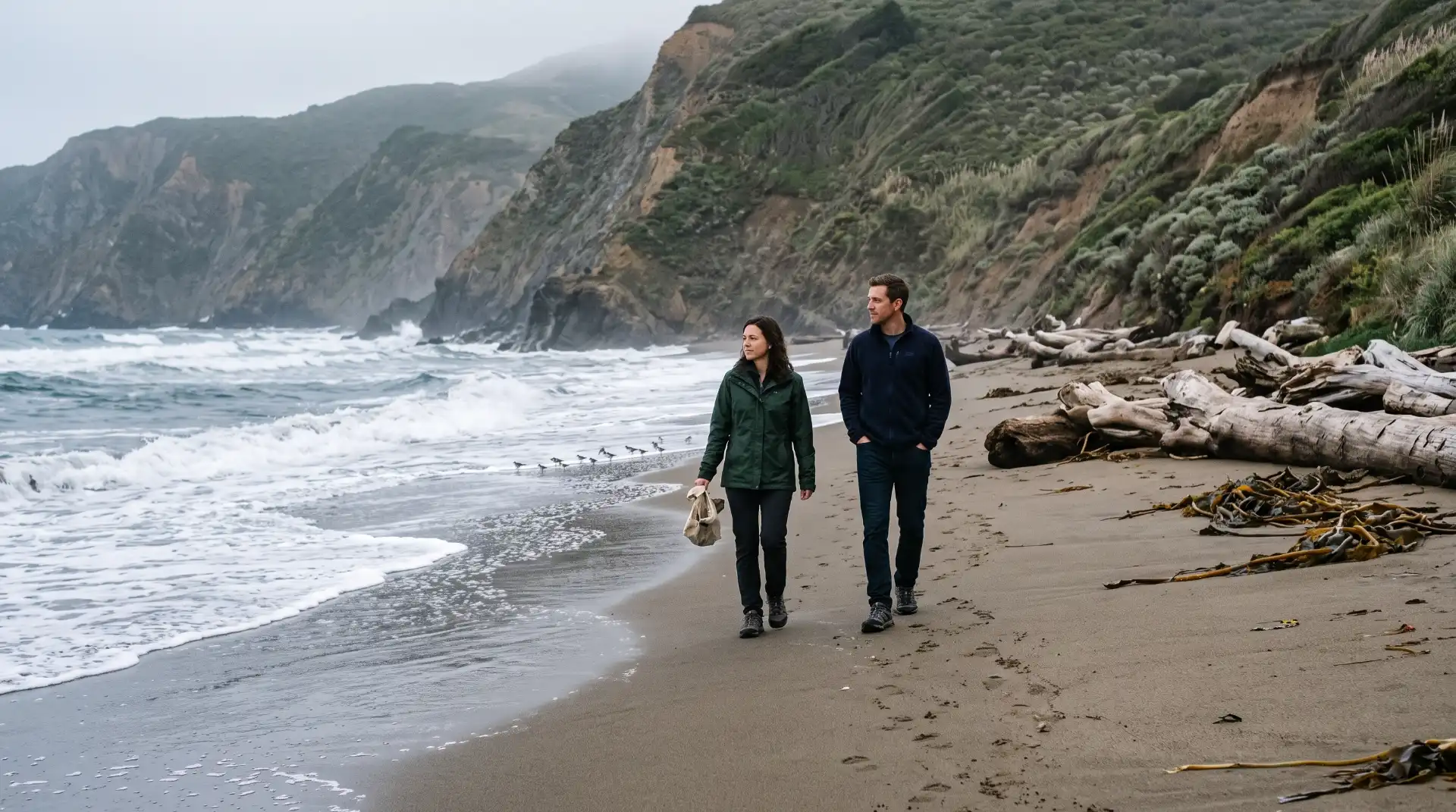
Marin County’s coastline features dramatic cliffs, sandy beaches, rocky shorelines, and open views across the Pacific Ocean. Popular destinations include Stinson Beach, Muir Beach, and the coastal areas around Point Reyes National Seashore.
These locations offer opportunities for walking, photography, picnicking, surfing, and simply enjoying the sound of the ocean. They also support coastal plants, marine organisms, birds, and other wildlife that can be affected by careless recreation.
The first principle of responsible beach travel is simple: leave the shoreline as clean as, or cleaner than, you found it. Carry a reusable bag for your own waste and collect loose litter when doing so is safe and appropriate. Do not leave food packaging, fishing line, beverage containers, cigarette butts, or disposable picnic supplies on the sand.
Even small pieces of trash can become environmental hazards. Lightweight plastic can be carried by the wind, while discarded fishing line may entangle birds and other animals. Waste left near waterways can eventually enter the ocean.
Beach visitors should also respect posted restrictions. Some areas may have temporary closures or seasonal protections designed to safeguard wildlife or respond to hazardous conditions. A beach that appears accessible on a map may have restrictions that are not obvious until arrival.
Before heading out, review local park notices, weather forecasts, tide information, and any applicable beach advisories. Conditions can change quickly along the Northern California coast, and a responsible itinerary should allow enough flexibility to choose a safer alternative when necessary.
Respect Tide Pools and Marine Life
Rocky shorelines and tide pools can reveal a fascinating world of small marine organisms. Visitors may encounter anemones, crabs, sea stars, mussels, and other species living in narrow bands between high and low tide.
These habitats are particularly vulnerable to careless handling. Turning over rocks, removing animals, stepping on exposed organisms, or crowding a tide pool can damage the small environment that supports them.
Observe marine life without touching it or removing anything. Use a camera or binoculars for a closer view, and avoid moving rocks or shells simply to improve a photograph. If a designated path or viewing platform is available, use it instead of climbing across unstable rocks.
The same principle applies to shells, driftwood, and other natural objects. Leave them where they are unless local rules specifically permit collection. Some objects may serve as habitat, while others are part of a protected coastal environment.
Families can make tide-pool visits more educational by encouraging children to notice colors, shapes, and movement without handling the animals. A simple conversation about how organisms survive changing tides can turn a short beach walk into a meaningful nature lesson.
Understand Coastal Conditions Before You Visit
Marin County’s coastal weather can differ significantly from conditions farther inland. Fog, strong winds, cold water, steep drop-offs, and powerful waves can make an apparently calm day more challenging than expected.
Never assume that a beach is safe for swimming simply because other people are present. Check local advisories, understand posted warnings, and remain alert to changing surf conditions. Keep a safe distance from the water when waves are unpredictable, especially near rocks and narrow sections of shoreline.
Visitors should also avoid climbing unstable coastal bluffs or standing near eroding edges for photographs. The best view is not worth risking a fall or contributing to damage around sensitive cliff vegetation.
Sustainable tourism includes personal safety because preventable rescues can place additional pressure on emergency responders and local resources. Choose activities that match your experience level, and leave enough time to return safely before darkness or worsening weather.

Watch Wildlife Without Disturbing It
Give Wild Animals Space
Marin County offers many opportunities to observe wildlife. Depending on the location and season, visitors may see shorebirds, raptors, deer, tule elk, marine mammals, and numerous smaller animals.
Wildlife watching can be one of the most rewarding parts of a visit, but it requires patience and restraint. Animals may change their behavior when people approach too closely. They may stop feeding, abandon resting areas, move away from their young, or expend energy escaping a disturbance.
Use binoculars or a camera with a zoom lens instead of approaching animals. If an animal repeatedly looks toward you, moves away, changes its posture, or appears agitated, increase your distance. Never surround an animal to prevent it from leaving, and do not encourage other visitors to gather closely around it.
Feeding wildlife is another practice to avoid. Human food can be unsuitable for wild animals and may teach them to associate people with meals. Animals that repeatedly seek food from visitors can become vulnerable to vehicle collisions, conflicts, and other hazards.
Keep snacks secured, dispose of waste properly, and follow local guidance about food storage. Even animals that appear accustomed to people should be treated as wild.
Observe Tule Elk and Other Large Animals Responsibly
Point Reyes National Seashore is known for its landscapes and wildlife, including tule elk in designated areas of the peninsula. Seeing these animals can be a highlight of a visit, especially for photographers and nature enthusiasts.
However, large animals need room to move and may react unpredictably when they feel threatened. Visitors should never approach elk for a closer photograph, attempt to touch them, or position themselves between an animal and its escape route.
Use designated viewing areas when available, remain on permitted trails, and follow current park instructions. During breeding periods or when young animals are present, additional caution may be necessary.
Wildlife viewing is most successful when visitors allow animals to behave naturally. A distant view of an elk grazing or resting is often more meaningful than a close encounter that interrupts its routine.
The same care applies to seals, sea lions, nesting birds, and other coastal wildlife. Do not approach resting marine mammals or attempt to move an animal that appears stranded. Follow instructions from park staff and appropriate wildlife authorities.
Make Wildlife Photography More Ethical
Wildlife photography can inspire people to appreciate conservation, but it can also encourage harmful behavior when photographers prioritize dramatic images over animal welfare.
Avoid using food, sounds, or repeated approaches to make an animal look toward the camera. Do not use drones where they are prohibited or where their operation could disturb wildlife. Follow applicable park regulations and maintain the distance required by posted signs or wildlife guidance.
A long lens can produce excellent photographs without requiring close contact. Photographing from a trail, overlook, or designated viewing location also reduces the likelihood of trampling plants or disturbing nearby habitat.
Be cautious when sharing precise locations of sensitive wildlife online. Publicizing the location of a nesting site, rare species, or vulnerable animal can attract crowds and increase disturbance. When appropriate, describe the general region instead of posting exact coordinates.
Responsible photography allows people to document the beauty of Marin County while respecting the fact that wildlife does not exist for human entertainment.
Choose Hiking Routes That Reduce Environmental Impact
Hiking is one of the best ways to experience Marin County’s natural diversity. Visitors can explore wooded paths, rolling hills, coastal headlands, and open-space preserves without requiring motorized recreation.
However, not every trail is suitable for every visitor, and a popular route may experience heavy use during weekends and holidays. Choosing a trail responsibly means considering both your own abilities and the condition of the surrounding environment.
Before setting out, review the route’s distance, elevation gain, surface conditions, accessibility, and expected weather. A trail that looks short on a map may include steep climbs, exposed sections, or muddy ground after rainfall.
For an introduction to the county’s outdoor options, read the existing guide to Top Outdoor Activities to Experience in Marin County. Use it as a starting point for planning, then check official land-manager information for current restrictions, trail conditions, and access requirements.
Stay on established trails rather than creating shortcuts around muddy sections or steep switchbacks. Walking around puddles can widen trails and damage nearby plants, so follow posted guidance about wet or closed routes. If a trail is closed because of erosion, storm damage, or habitat protection, choose another route rather than trying to bypass the restriction.
Hikers should also yield appropriately to other trail users and follow local rules for bicycles, horses, and dogs. On shared trails, communicate politely, slow down when necessary, and avoid blocking narrow sections.
Visit Popular Places at Less Crowded Times
Timing can influence how sustainable and enjoyable a hiking trip becomes. Popular trailheads and coastal parking areas may become congested during weekends, holidays, and peak vacation periods.
Where schedules allow, consider visiting on a weekday or arriving during a less busy period. Check opening hours and parking arrangements before leaving, because early arrival does not override reservation requirements or posted access restrictions.
Having an alternative destination is also useful. If the intended parking area is full or a trail is closed, avoid circling repeatedly or parking illegally along narrow roads. Select another appropriate public recreation area after checking its rules and current conditions.
The goal is not to send visitors into sensitive places simply because they are less crowded. Instead, select destinations with established access, appropriate facilities, and enough capacity to accommodate the planned activity.
Travelers should also remember that less popular locations may have fewer restrooms, trash facilities, and emergency services. Pack the supplies you need, stay within your abilities, and do not assume that a remote area will offer the same services as a major visitor center.
Reduce Your Transportation Footprint
Consider Transit, Carpooling, and Efficient Trip Planning
Transportation is an important part of sustainable tourism. Marin County’s natural attractions are spread across coastal communities, forests, and rural landscapes, so many visitors rely on private vehicles.
However, individual driving trips can contribute to traffic congestion, parking pressure, fuel consumption, and emissions. Thoughtful transportation choices can reduce these impacts without preventing visitors from experiencing the region.
When practical, use public transportation, an official park shuttle, or a shared ride. Marin Transit maintains information about routes serving selected recreation areas, including connections relevant to Stinson Beach, Samuel P. Taylor State Park, Tomales Bay State Park, and Point Reyes National Seashore.
Check current schedules, service days, stop locations, and walking distances through the Marin Transit Transit to Parks guide. Not every destination has frequent service, so planning a trip around transit availability is essential.
If driving is necessary, carpool with friends or family whenever possible. Combine nearby attractions into one well-planned outing instead of making several separate trips. Download directions before departure and use designated parking rather than stopping along narrow roads for an unplanned photograph.
Visitors should also avoid idling unnecessarily and should never block driveways, emergency access routes, or residential entrances. Responsible parking helps protect local communities while improving safety for everyone using the road.
Explore at a Comfortable Pace
A sustainable itinerary does not have to include every attraction in a single day. Trying to visit Muir Woods, several beaches, Point Reyes, and multiple towns within a few hours can lead to rushed experiences and excessive driving.
A more thoughtful plan groups nearby destinations and leaves time to enjoy each place. For example, a visitor could devote one day to a redwood forest and nearby Mill Valley, then reserve another day for coastal scenery and local businesses in West Marin.
This approach can also make the trip more rewarding. Travelers have more time to read interpretive signs, observe wildlife quietly, explore a community, or stop for a meal without feeling pressured to rush to the next location.
When planning a multi-stop itinerary, consider travel time, parking availability, opening hours, and daylight. Always confirm current conditions before setting out, particularly during the rainy season when roads, trails, and facilities may be affected by storms.
Support Local Businesses and Communities
Spend Locally and Respect the Places You Visit
Sustainable tourism is not only about protecting landscapes. It also involves supporting the people who live and work in the destination.
Marin County includes distinctive communities with local restaurants, independent shops, farms, markets, lodging providers, and small businesses. Spending money with local operators can help keep tourism benefits within the region and strengthen the communities that visitors come to experience.
Consider stopping for coffee at an independent café, purchasing a meal from a locally owned restaurant, or browsing shops that sell products made by regional artists and craftspeople. When appropriate, buy seasonal food from local markets and learn about the agricultural traditions of West Marin.
Visitors can also look for businesses that demonstrate practical environmental responsibility. Examples may include reducing unnecessary packaging, offering refill options, managing food waste, conserving water, or sourcing products responsibly. Ask questions respectfully rather than assuming that a business is sustainable simply because it uses environmental language in its marketing.
Choose lodging that fits your needs and location, and check its transportation options, waste practices, and water conservation measures. Staying closer to the places you plan to explore may reduce unnecessary driving, although the best choice depends on availability, budget, and the specific itinerary.
Be a Good Neighbor in Coastal Towns
Marin County’s coastal communities are not just tourist destinations. They are places where people live, work, attend school, and carry out everyday activities.
Visitors should respect residential streets, private property, local parking restrictions, and quiet hours. Do not trespass through fields or gardens to reach a scenic viewpoint, and avoid blocking access to homes or businesses while taking photographs.
Travelers should also remember that small coastal communities may have limited parking, restrooms, and waste services. Bringing supplies, using designated facilities, and leaving public spaces clean helps prevent tourism from creating unnecessary burdens for residents.
If a favorite restaurant or shop is busy, be patient and courteous. Sustainable travel includes the way visitors treat local workers and other customers, not just the physical environment.
For longer stays, learn about the community’s character and history. Local museums, cultural organizations, visitor centers, and interpretive programs can provide context that makes a trip more meaningful. Approach Indigenous history and cultural heritage with respect, relying on credible sources and community-led interpretation whenever available.
Make Family Trips More Sustainable
Marin County is an appealing destination for families because outdoor activities can combine recreation, learning, and time together. Children can discover the structure of a redwood forest, watch waves from a safe overlook, identify bird calls, or learn how coastal habitats change with the tides.
Parents can encourage sustainable habits by preparing reusable water bottles, refillable snack containers, and a small waste bag before leaving home. Explain that wrappers and food scraps belong in the appropriate waste facilities rather than on the ground, and make a habit of checking the picnic area before departing.
Children can also learn to observe wildlife without chasing animals or picking plants. Give them a simple challenge, such as spotting three different leaf shapes or listening for two kinds of bird calls, rather than encouraging them to collect natural objects.
Choose routes that match the family’s abilities and energy levels. A short, accessible walk may be more enjoyable than a demanding hike that leaves young children exhausted. Check whether restrooms, water, accessible paths, and suitable parking are available before traveling.
At beaches, supervise children closely near the water and explain why they should not approach seals, touch marine animals, or climb unstable rocks. Coastal conditions can change quickly, and an adult should remain attentive even when the water appears calm.
The most effective environmental lessons are often practical. When children see adults carrying out their own trash, respecting barriers, and treating wildlife carefully, they learn that conservation is part of enjoying the outdoors.
Practice Water and Energy Conservation During Your Stay
California’s water resources are important to both natural ecosystems and local communities. Visitors may not think about water use while staying in a hotel or vacation rental, but everyday choices can help reduce unnecessary demand.
Take reasonably short showers, turn off faucets when they are not needed, and reuse towels when appropriate. Follow the property’s instructions for linen changes and report leaking taps or toilets to the responsible staff.
Avoid wasting water while cleaning outdoor equipment or washing vehicles. If a property provides information about local water conservation, follow its guidance rather than assuming that visitor use is exempt from local conditions.
Energy use is another consideration. Turn off lights and electronics when leaving a room, use heating and cooling sensibly, and take advantage of natural light when comfortable. These steps may be modest individually, but they support more efficient resource use across many visitor stays.
Waste reduction is equally valuable. Choose products with less packaging, bring reusable shopping bags, and use refill stations where available. When sorting recycling and compost, follow the specific instructions at the property or facility because accepted materials can vary.
Visitors should not assume that every item labeled biodegradable or compostable belongs in a public compost bin. If the correct disposal method is unclear, check local instructions rather than placing the item in the wrong stream.
Understand Seasonal Changes and Their Environmental Effects
Marin County can be explored throughout the year, but conditions vary by season. Understanding those differences helps visitors make safer decisions and avoid unnecessary impacts.
Spring may bring green hillsides, wildflowers, and opportunities for birdwatching. However, visitors should avoid trampling vegetation to photograph flowers or leaving established trails to reach a particular patch of color.
Summer often attracts more visitors to beaches, scenic roads, and popular hiking areas. Plan ahead for parking, bring adequate drinking water, and avoid creating additional congestion through repeated searches for a full parking space.
Fall can provide comfortable conditions for many outdoor activities, although weather and fire-related restrictions may change. Check park alerts and any applicable fire regulations before traveling or using designated picnic and camping facilities.
Winter brings rain, stronger coastal weather, muddy trails, and the possibility of temporary closures. Heavy rainfall can increase erosion and create hazardous conditions along exposed routes. Respect closure notices and avoid walking through sensitive areas simply to bypass mud.
Seasonal wildlife activity also deserves consideration. Nesting birds, resting marine mammals, and other animals may require extra space or temporary habitat protections. Follow posted signs even if the reason for a restriction is not immediately obvious.
The best sustainable travel plan is flexible. If weather or habitat protection makes an activity unsuitable, choose another permitted experience rather than attempting to force the original itinerary.
Plan a Sustainable Weekend in Marin County
A responsible weekend itinerary can include redwood forests, coastal scenery, local food, and wildlife observation without rushing between every major attraction.
Day One: Redwoods and Local Communities
Begin the day with a planned visit to Muir Woods National Monument. Confirm the required reservation arrangements, arrive within the permitted window, and spend time walking on designated trails. Keep noise low, carry out personal waste, and take photographs without disturbing plants or wildlife.
After the forest visit, explore a nearby community such as Mill Valley. Choose a local restaurant or café for lunch, browse independent businesses, and allow enough time to enjoy the town without rushing back to the car.
In the afternoon, consider a suitable coastal walk near Muir Beach if conditions and access allow. Check current trail information and weather before setting out, and choose a route appropriate for everyone in your group.
Finish the day with a locally sourced meal where available. If you are staying overnight, select lodging with convenient access to your next day’s activities to reduce unnecessary travel.
Day Two: Coastal Scenery and Wildlife
Spend the second day exploring the Point Reyes area or another appropriate coastal destination. Before leaving, check park alerts, road conditions, wildlife guidance, and the availability of visitor facilities.
At Point Reyes National Seashore, select a manageable route based on the group’s abilities and the current conditions. Use designated overlooks and trails, and allow wildlife to move freely without approaching it.
If you visit a beach, take time to observe the shoreline while leaving shells, plants, and marine life undisturbed. Pack out your trash and follow any restrictions intended to protect sensitive habitats.
Plan a meal or shopping stop in a nearby community before returning home. This provides an opportunity to support local businesses and experience more of the region’s character beyond its most famous natural attractions.
The itinerary should remain flexible. A crowded parking area, strong coastal winds, a closed trail, or a wildlife protection notice may justify changing the plan. Sustainable tourism means respecting those conditions rather than treating every scheduled stop as mandatory.
Common Sustainable Travel Mistakes to Avoid
Even well-intentioned travelers can unintentionally harm the places they visit. One common mistake is assuming that a natural area can absorb any kind of human activity because it looks large or remote. In reality, concentrated foot traffic, repeated disturbance, and accumulated waste can have lasting effects on small habitats.
Another mistake is feeding wildlife or moving closer for a photograph. Animals may appear calm, but their behavior can change when people invade their space. Maintain a respectful distance and use optical equipment for close-up views.
Visitors sometimes underestimate the importance of reservations and parking rules. Arriving without the required arrangements can create traffic problems and lead to unsafe parking decisions. Confirm access requirements before leaving home and have an alternative plan.
Leaving food scraps behind is also harmful, even when the material seems natural. Carry out leftovers and use appropriate disposal facilities. Similarly, do not assume that a trail, beach, or overlook is open simply because it appears on a navigation application.
Finally, avoid treating sustainability as a marketing label rather than a practical commitment. A responsible trip involves everyday decisions about transportation, waste, water, wildlife, and how visitors interact with local residents.
Where to Find Reliable Information Before You Go
Travel conditions can change because of weather, maintenance, habitat protection, emergencies, or seasonal operating schedules. Before visiting Marin County’s outdoor destinations, consult official sources rather than relying exclusively on old travel articles or social media posts.
The Marin County Convention and Visitors Bureau offers guidance on sustainable tourism in Marin County, including Leave No Trace practices and ways visitors can help care for local natural areas.
For national park destinations, the National Park Service provides current information about reservations, access, safety, and park rules. The Muir Woods visitor planning page is especially useful for checking arrangements before a visit to the redwood forest.
Travelers can also consult Marin Transit for transportation options and check relevant county or state park pages for closures, trail conditions, and recreation rules.
These resources are valuable because sustainable travel depends on current information. A route that was open last month may be closed today, and a transportation service may operate only on certain days or seasons. Checking details before departure helps protect the environment while reducing avoidable disruption.
Why Sustainable Tourism Matters for Marin County’s Future
Marin County’s natural attractions are valuable not only because they draw visitors but also because they support wildlife, outdoor recreation, environmental education, and the well-being of local communities.
When people stay on established trails, dispose of waste properly, avoid disturbing wildlife, and respect coastal restrictions, they help preserve the conditions that make these destinations special. When visitors support local businesses and plan transportation thoughtfully, tourism can also contribute to community resilience.
No single traveler can solve every environmental challenge. However, millions of individual decisions influence how public lands and coastal communities experience tourism. Responsible choices can reduce unnecessary pressure and encourage a culture in which people value protection alongside recreation.
Sustainable tourism also improves the visitor experience. A clean beach, a quiet redwood trail, a respectful wildlife encounter, and a welcoming local business can make a trip more memorable than a hurried checklist of attractions.
The most meaningful way to explore Marin County is to recognize that its landscapes are not simply scenery to consume. They are living places that deserve care, respect, and thoughtful stewardship.
Final Thoughts: Explore Marin County With Care
Sustainable tourism in Marin County begins with a simple idea: enjoy the region’s remarkable landscapes while helping protect them. Whether you are walking among redwoods, visiting a coastal beach, watching wildlife at Point Reyes, or enjoying a meal in a small town, your decisions can make a difference.
Plan ahead, use established trails, respect wildlife, carry out waste, choose transportation thoughtfully, and support local businesses when possible. Check official information before visiting and remain flexible when weather, crowding, or conservation needs require a change of plans.
You do not need an elaborate eco-tourism itinerary to travel responsibly. Small, consistent habits can make an outdoor adventure more considerate of the environment and the people who call Marin County home.
By exploring with care, visitors can help ensure that Marin County’s beaches, redwood forests, wildlife habitats, and coastal communities remain rewarding places to experience for years to come.